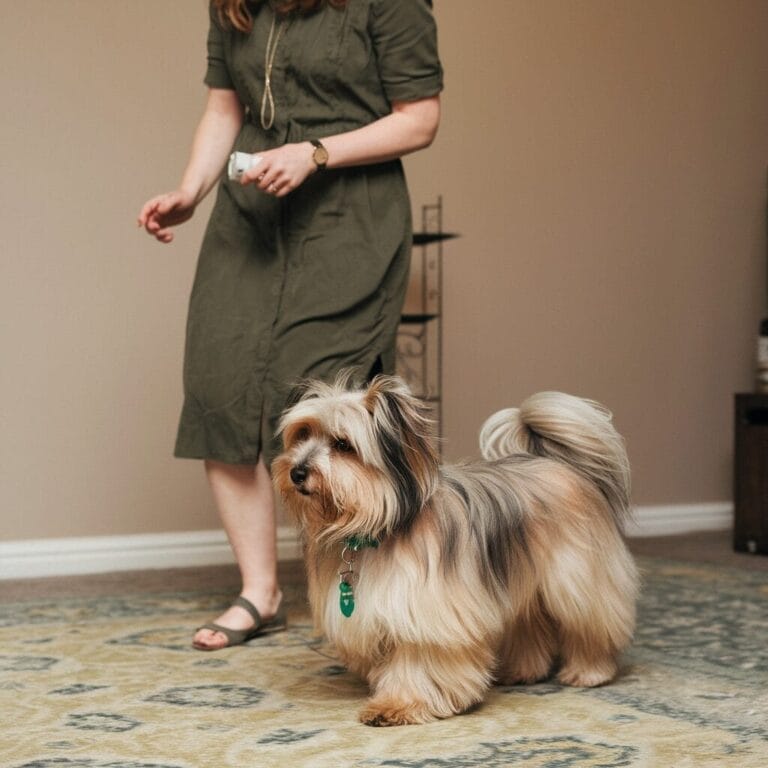
A safe Havanese grooming routine starts with the coat, not the bathtub. Brush in small sections, check your work with a smooth metal comb, and bathe only when the coat is free of tangles. Add regular nail, ear and paw checks, and you have a practical foundation for home maintenance.
The aim is not to finish everything in one sitting. A few calm sessions spread across the week are more manageable than one long grooming day. Adjust the time you spend to your dog’s coat length, comfort and needs, while keeping one rule consistent: never push through pain, tight mats or frightened resistance.
Your Havanese grooming schedule at a glance
Think of the routine as a series of checks rather than a timetable that requires every task every week. A long coat needs frequent attention, but clean ears do not need automatic cleaning, and nails should be trimmed according to their growth.
- Most days: Briefly brush and comb a long coat, concentrating on friction areas. The American Kennel Club recommends daily grooming for a long Havanese coat to help prevent mats. A short pet trim may need less time, but still needs frequent checks.
- Once a week: Part the hair down to the skin in trouble spots. Check ears for odor, redness or discharge, and inspect paw pads, toes, dewclaws and nail length.
- About every two to three weeks, or as needed: Trim or grind small amounts from the nails. Let nail length, growth and your veterinarian’s advice determine the interval.
- When a bath is needed: Brush and comb out every tangle first, then wash, rinse thoroughly and dry the coat fully.
A weekly bath is not a required part of this schedule. Bathing should suit your dog’s coat and lifestyle rather than a fixed calendar.
Choose a small, useful grooming kit
Start with tools that serve a clear purpose. A large kit is not necessarily better than a few suitable basics, and a product described as “quiet” may still worry your dog.
- A gentle slicker or pin brush: Choose a comfortable size for a small dog, with pins that glide through the coat without scratching.
- A smooth metal comb: Use it to confirm that each brushed section is free of tangles near the skin.
- A small dog nail clipper or pet nail grinder: Choose according to your handling skills and what your dog tolerates.
- Styptic powder: Keep it available before trimming nails, and follow its directions if you nick the quick.
- Dog shampoo and towels: These are the bathing basics. Add an adjustable low-heat dryer if your current setup cannot dry the coat thoroughly.
- Ear-care supplies when advised: Use a dog ear cleaner recommended by your veterinarian, with gauze or cotton pads for the visible ear area.
Before buying a kit, check whether it actually contains the brush, comb and nail tool you need. Compare current listings rather than relying on fixed prices or attachment counts. For a closer look at the essentials, see the Havanese grooming equipment guide Havanese dogs – Basic grooming equipment requirements for your Havanese..
Brush in sections, then let the comb check your work
A coat can look smooth on top while tangles remain underneath. Section-by-section grooming helps you check near the skin instead of repeatedly brushing only the outer hair.
- Set up calmly. Use a non-slip surface and keep treats within reach. Begin with an area your dog accepts comfortably.
- Lift a small layer of hair. Work gently from near the skin toward the ends without scraping the skin.
- Check that section with the comb. Pass a smooth metal comb through the same hair rather than moving straight to the next area.
- Pause at a snag. Do not pull the comb through resistance. Hold the hair near the skin and gently ease a loose tangle apart with your fingers.
- Continue in manageable sections. Stop for a break if your dog becomes worried or uncomfortable.
Give extra attention to behind the ears, under the collar or harness, the armpits, belly, legs, paws and tail base. These are easy places for a surface brush to miss.
The comb is the test: if it catches, that section is not ready for bathing. Water can make existing tangles harder to remove. For help preventing recurring trouble spots, read the Havanese mat-prevention guide Taming The Tangles: Preventing Matting In Your Havanese Dog’s Coat.
Know when a tangle is no longer a home job
A loose snag and a tight mat need different responses. If a mat lies close to the skin, causes pain or affects a large area, stop and ask a professional groomer for help. Do not slide scissors underneath it: skin can be difficult to distinguish from the matted hair and is easily injured.
If maintaining a long coat is becoming difficult, discuss a more manageable trim with your groomer. The Havanese haircut guide can help you explore styles before that conversation The Best Havanese Haircut Styles for Different Coat Types. A shorter coat may reduce grooming time, but it does not remove the need for checks.
Bathe only after the coat is tangle-free
Once the comb passes through every section, prepare for a bath with lukewarm water and a gentle shampoo made for dogs. Keep water and shampoo away from the eyes and ears, and rinse thoroughly.
Choose shampoo for the job rather than assuming a new product will solve irritated skin. The Havanese shampoo guide explains what to look for and when a skin concern needs veterinary attention instead Best Shampoo for Havanese Dogs: What to Look For.
- Finish the dry-coat check. Confirm that no tangles remain, including in friction areas.
- Wash gently. Use dog shampoo as directed, protecting the eyes and ears.
- Rinse well. Work through the coat carefully rather than rushing this stage.
- Blot with a towel. Avoid rubbing the hair into knots.
- Dry in sections. Use comfortable, low heat and low airflow if your dog tolerates a dryer, combing as you go.
Keep the dryer moving and check the air with your hand so it never feels hot. Keep airflow away from the face, and confirm that the coat is dry down to the skin rather than just dry on the surface. Pause if your dog becomes distressed or the skin looks irritated.
For a more detailed walkthrough of the bathing process, use the step-by-step Havanese bathing guide How to Safely Bathe Your Havanese: Step-by-Step Instructions and Product Recommendations.
Check paws weekly and trim nails conservatively
During your weekly check, inspect the paw pads, between the toes and every nail, including the dewclaws. An injured or painful paw needs veterinary attention, not a more determined grooming session.
Nails that are getting long or clicking on hard floors are a reason to assess whether a trim is due. Many dogs need attention around every two to three weeks, but the right interval depends on the individual dog. Check weekly so you can respond to growth rather than follow a fixed cutting schedule.
Take small amounts, not a standard measurement
Use a small, sharp dog nail clipper or a pet nail grinder. On a light-colored nail, stay well clear of the visible pink quick. On a dark nail, remove only a tiny amount from the tip at a time.
Never use a fixed “one-eighth inch” rule: the position of the quick differs between dogs and nails. If using a grinder, keep long fur clear of the rotating bit and use brief touches to limit heat buildup and over-grinding.
Have styptic powder ready before you begin. If you nick the quick, apply it as directed. Contact your veterinarian if bleeding does not stop or your dog seems very uncomfortable. If you cannot judge where to cut, or your dog resists handling, ask a groomer or veterinary professional to demonstrate.
Look at ears weekly; clean only when needed
Lift each ear flap and look and smell. A healthy, clean ear does not need a weekly deep cleaning simply because it is grooming day.
If your veterinarian recommends routine cleaning, use a dog ear cleaner as directed and wipe only the visible area with gauze or a cotton pad. Do not put cotton swabs into the ear canal, and keep the ears dry after bathing.
Call your veterinarian before cleaning if you notice:
- A bad or unusual smell.
- Redness or swelling.
- Pain when the ear is handled.
- Repeated head shaking.
- Unusual discharge.
These signs are not a cue to add more cleaner. Home grooming is maintenance, not treatment for a painful or abnormal ear.
Build cooperation with short, rewarding sessions
For a puppy, begin with the smallest useful step: sniffing a brush, accepting one gentle stroke, having one paw touched or allowing an ear flap to be lifted. Reward the calm interaction and stop before the puppy begins struggling.
Build gradually toward brushing and combing a whole section, then several sections. Do not force a frightened puppy through a bath, ear cleaning or nail trim to complete the checklist. Ask a groomer or veterinary professional for a demonstration when technique or handling is uncertain.
Puppy coats change, so increase checks if tangles begin forming more quickly. The same short-session approach is useful for an adult dog that finds grooming difficult: separate coat work, paw handling and ear checks instead of stacking every task into one sitting.
Make the routine sustainable—and know when to get help
A workable week might include brief daily coat sessions, one ear-and-paw inspection, and a nail trim only if needed. A bath can happen separately once the coat is ready. There is no benefit in turning all of these into one stressful appointment at home.
Keep a clear boundary between maintenance and jobs that need professional skill:
- Book a groomer for tight or extensive mats, clipping close to the skin, or a dog you cannot handle safely.
- Contact your veterinarian for painful or smelly ears, discharge, sore skin, an injured paw or nail bleeding that does not stop.
- Ask for a demonstration when you are unsure how to brush near the skin, locate a safe nail-trimming point or use a recommended ear cleaner.
Buying clippers does not make close-to-skin work safe. If you are considering them for suitable maintenance tasks, first learn how different clipper types are intended to be used Dog Grooming Clippers Explained: How to Choose the Right Clipper.
The most useful routine is consistent and gentle: check frequently, comb thoroughly, bathe only a tangle-free coat and stop when something hurts. Those habits make home grooming a manageable part of caring for your Havanese rather than a weekly test of endurance.
Related guides
- Why Havanese Get Tear Stains—and How to Fix Them
- How Much Do Havanese Dogs Smell?
- Andis ProClip 5-in-1 Review: A Detail Clipper, Not an All-Purpose One
- Oneisall Dog Shaver Clippers Review
- About the Author
- Latest Posts

Sara is a passionate writer and an avid lover of Havanese dogs. With several years of experience in dog training, breeding, and care, she has developed a deep understanding and admiration for the Havanese breed. Sara’s mission is to provide valuable insights, resources, and tips to help Havanese dog owners provide the best possible care and nurturing for their beloved pets.